
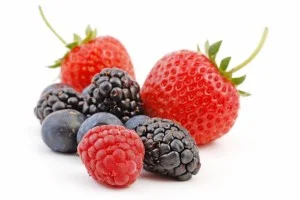
Berry Delicious
Fresh, colorful berries at your local supermarket or farmer’s market are a sure sign that summer is here. Some sweet, others tart, berries are a delicious and nutritious treat and can be eaten whole, served fresh, frozen or in baked goods. Berries are available all year from a variety of sources, though most are considered summer fruits.

Fresh, colorful berries at your local supermarket or farmer’s market are a sure sign that summer is here. Some sweet, others tart, berries are a delicious and nutritious treat and can be eaten whole, served fresh, frozen or in baked goods. Berries are available all year from a variety of sources, though most are considered summer fruits. They are best consumed within 2-3 days and should be washed just prior to serving but can be kept frozen for up to a year.
Berries are a great fat-free source of nutrients such as vitamin C, fiber, and antioxidants and should be included in your daily recommended 5 servings of fruits and vegetables for optimal health. Eat fresh, dried, canned, as a jelly or jam or add as a topping to cereals, yogurt, waffles, ice cream, salads and sorbet, or add to your favorite smoothie, beverage, sauces and baked goods such as pies, tarts, and cakes.
Berry Varieties
- Blackberry
- Black/Red Grape
- Blueberry
- Boysenberry
- Cranberry
- Currant
- Gooseberry
- Green Grape
- Lingonberry
- Loganberry
- Mulberry
- Fuyu Persimmon
- Hachuya Persimmon
- Raspberry
- Strawberry
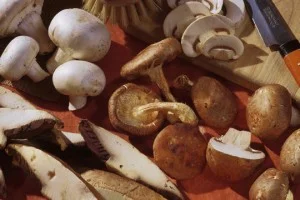
Mushrooms
Mushrooms are a great low-calorie, sodium-free, fat-free source of potassium and other nutrients and lend a fun flavor and texture to stir-fries, casseroles, pastas, rice dishes, pizza, meat dishes, burgers, salads and more.

Mushrooms are a great low-calorie, sodium-free, fat-free source of potassium and other nutrients and lend a fun flavor and texture to stir-fries, casseroles, pastas, rice dishes, pizza, meat dishes, burgers, salads and more. Available in many varieties, mushrooms are a great addition to a multitude of dishes and are even great as a grilled, sautéed, baked or fried side dish. Be sure, however, to use fresh, closed-gill varieties from your market as the ones that are decaying or picked from your own garden may be poisonous/toxic. Try marinating, stuffing, pickling or many other options for enjoying mushrooms.
Portobello mushrooms are often consumed by vegetarians as well as those who are watching their intake of fat, cholesterol and calories because of their larger, thicker, fleshier cap and distinct meaty texture. Portobellos can be eaten in place of a burger, marinated, grilled, roasted, sautéed, stuffed, baked or fried for a delicious, lighter, vegetarian meal or as an addition to meat and be kept frozen after cooking for several months. Be sure to wash gently and remove the gills on the underside of the cap by gently scraping, before cooking, as they have a bitter taste and a dark coloring when cooked.
Visit www.mushroomcouncil.com for more information.
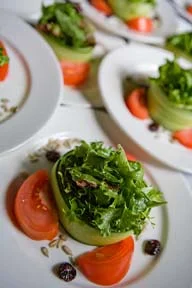
Summer Vegetables
Summer is almost here and summer vegetables are beginning to arrive in your local supermarkets, specialty markets and farmer’s markets. Experts recommend consuming 5 servings* a day of fruits and vegetables to help reduce your risk of heart disease and cancer. Summer veggies are not only nutritious and delicious, they’ll help you look and feel your best by providing vitamin C, potassium, lutein, folate, iron, fiber, and essential hydration. Try one or more of these summer veggies today:
Summer is almost here and summer vegetables are beginning to arrive in your local supermarkets, specialty markets and farmer’s markets. Experts recommend consuming 5 servings* a day of fruits and vegetables to help reduce your risk of heart disease and cancer. Summer veggies are not only nutritious and delicious, they’ll help you look and feel your best by providing vitamin C, potassium, lutein, folate, iron, fiber, and essential hydration. Try one or more of these summer veggies today:
- Arugula
- Eggplant
- Potatoes
- Avocados
- Garlic
- Shallots
- Green Beans
- Kohlrabi
- Summer Squash
- Beans
- Mushrooms
- Swiss chard
- Beets
- Okra
- Tomatoes
- Collards
- Onions
- Zucchini
- Corn
- Sugar Snap Peas
- Cucumber
- Peppers
Try some of these ideas…
- Skip the chips which make you thirstier and opt for bright crunchy carrots and celery which are low in calories and fat and high in nutrients that will keep you feeling refreshed.
- Add some fresh veggies to your summer salad for a cool light meal packed with nutrients
- Load your baked potato or pasta with cooked veggies instead of butter or rich sauces or even toss with light olive oil or add to your favorite light sauces to give you flavor and energy on a hot summer day
* One serving of vegetables is equivalent to ¼ cup dry or one medium sized fresh vegetable such as a carrot or ¾ of a cup of juice or ½ cup cooked or 1 cup raw veggies.
What Causes Food Allergies?
 Many of the ailments we suffer from can actually be mild to severe symtoms of consuming our favorite foods, even foods that we know are healthy. The fact is that any food can cause an allergic reaction and as we get older, we can develop new allergies.
Many of the ailments we suffer from can actually be mild to severe symtoms of consuming our favorite foods, even foods that we know are healthy. The fact is that any food can cause an allergic reaction and as we get older, we can develop new allergies. Though most allergic reactions occur with in a few minutes to a few hours after consumption, many ailments are caused by foods we consumed several days before we feel a reaction. The reaction you feel that causes you to not feel well is your immune system fighting back against the two main food allergies IgE (Immunoglobulin E) and lgG (Immunoglobulin G).
lgE reactions occur within minutes to hours after eating a food that your body is allergic to and can cause hives, swelling around the mouth, asthma, diarrjea, vomiting, and even life-threatening anaphlaxis. The most common offenders for approximately 4% of the population, are cow’s milk, eggs, peanuts, wheat, soy, fish, shellfish, and tree nuts. Just as your body’s immune system would attack bacteria and viruses, it would also treat a food allergy in the same defensive manner. Other food allergies are of the lgE type and are often referred to as food sensitivity or intolerance with more hidden and often delayed reactions within the body that can take hours or days to manifest and can irritate or worsen health problems you already have.
About 60% of the population is affected by ailments such as headaches, depression, anxiety, nasal congestion, itching, fatigue, muscle aches, stiffness, irritable bowel syndrome (IBS), Gastroesphageal Reflux (GERD), heartburn, indigestion, joint pain, inability to focus, palpitations, mental confusion, ADD/ADHD and other ailments caused by frequently consumed foods such as wheat, milk, and corn.
How do we get food allergies? Often we inherit our allergies through genetics or by constantly being exposed to the same foods over and over rather than having variety in our diets. If we have illnesses like IBS, we may be more inclined to have allergies as well as have our allergies cause illness. When our bodies are repeatedly exposed to offending foods, our immune systems become overwhelmed by the proteins in those foods and begin attacking weaknesses in our bodies. This can cause chronic illness when our immune system antibodies combine with serum proteins causing permanent cell damage such as in the case of arthritis, multiple sclerosis, and other chronic conditions.
How can you find out what you are allergic to? Skin tests are not very reliable, and elimination and placebo diets are a hassle, but there is a blood test that can show intolerances for 90 different foods. Once you determine what you are allergic to, avoiding it should eliminate your symtoms of allergy. Some experts would argue that there are medications and other treatments that can help eliminate the symptoms of allergy, but they are only a temporary solution and not a cure because they only block the body’s natural reaction to an offender such as antihistamines blocking the release of histamines which make us itchy from foods we eat. The itching is the body’s way of telling us that food is not healthy for us though it may be healthy for others. Sometimes the medications can cause other reactions that are not favorable, so the only safe way to keep you free from illness caused by offending foods is to eliminate them from your diet and if you are suffering from chronic symptoms, be sure to talk to your primary care physician about testing for food allergies and how to get the nutrition you need from sources that work best for your body.
Artichokes, the Perfect Spring Treat
 Whether you’ve never had an artichoke, don’t know how to prepare or eat one, or are already an expert, now is the time to enjoy since they are in peak season from March to May.
Whether you’ve never had an artichoke, don’t know how to prepare or eat one, or are already an expert, now is the time to enjoy since they are in peak season from March to May.
Artichokes are a Mediterranean food related to the thistle and are delicious and fun to eat. They’re easy to prepare and are an excellent source of nutrients like dietary magnesium, fiber, and the trace mineral chromium. They’re also a very good source of vitamins A and C, folic acid, biotin, niacin, riboflavin, thiamine, potassium, the trace mineral manganese, and a carbohydrate that’s in the form of insulin. These properties make them healthy for the whole family including those watching their calories and blood sugar. Fresh artichokes contain polysaccharide which is a carbohydrate handled by the body differently than other sugars, making them low in calories and extremely beneficial to diabetics because the type of insulin they produce has been shown to improve blood sugar control in diabetes. Throughout history artichokes have been known to treat liver disease, lower cholesterol, and are considered an aphrodisiac food.
There are many varieties of artichokes, ranging in color from olive green to deep red, though the Globe variety is most commonly found in supermarkets. Commonly known as a vegetable, the artichoke is actually a flower bud, which when allowed to blossom, is violet blue in color. Artichokes come in a variety of sizes—the biggest, perfect for steaming or boiling, while baby artichokes (often much cheaper) are a delicious and tender addition to almost any recipe. When buying artichokes, as with any produce, fresh is best. Choose artichokes that are tightly closed and seem heavy for their size with few discolored or shriveled leaves. Rub the leaves together; if they squeak, they’re fresh. Once you get your artichokes home, keep them in a sealed bag in the refrigerator to prevent discoloration.
75% of the 3 million cartons of domestically-grown artichokes are grown in Castroville, California, the self-proclaimed Artichoke Center of the World since 1959 with an annual mid-May festival to celebrate the artichoke. Have your own celebration by enjoying some steamed artichokes petals at home. Dip them in butter or your favorite sauce for an added treat and you’ll be hooked!
How to Cook an Artichoke
Once you’ve bought your artichoke, preparation is easy. Start by trying the classic steamed or boiled approach and then you can experiment with different methods and recipes as you get more comfortable.
- Wash the artichoke in cold water.
- Remove any discolored or shriveled lower petals.
- Using a sharp stainless steel knife (to prevent discoloration) trim the stem close to the artichoke’s base.
- Cut off the top quarter of petals if you prefer so the tips don’t poke your fingers.
- To preserve the vegetable’s color, though not necessary, you can dip it in acidified water prior to cooking (one quart of water mixed with one tablespoon of lemon juice or vinegar). You can also add a touch of sugar and salt or herbs to the boiling water to obtain a better flavor.
- Steam (place on rack above an inch or two of boiling water) or boil (add to pot with enough boiling water to completely cover). Cook until you can pull off a petal near the center with ease—25 to 40 minutes depending on the size of the artichoke. Large ones may take 60 minutes but are much “meatier”
How to Eat an Artichoke
The artichoke is like a delicacy that can be consumed alone or with a simple dipping sauce to complement it and make a great appetizer, especially for kids. This spiny vegetable can be an intimidating presence on the dinner table if you’ve never had one whole but the following tips can help even the novice artichoke eater enjoy the wonderfully nutty flavor of this unique plant like an expert:
- Pull off outer petals one by one, dip the thicker base into the sauce of your choice, and bite or scrape the succulent pulp off the inside of the petal with your teeth. Discard the rest of the petal. This is especially fun for children.
- When you get to the heart of the artichoke, spoon or cut away the fuzzy portion in the center, cut the remainder of the heart (including any portion of the attached stem) into bite-size portions, dip, and savor!
Final Notes on Artichokes
Once you’ve mastered the basic preparation and eating techniques, allow yourself to get creative. Artichokes can be marinated and grilled, stuffed and fried, sautéed with meat and vegetables as a topping for pasta, roasted, braised, added to salads, or creamed in soups. If you prefer to keep things simple, try varying your dipping sauces for steamed artichokes. For a change of pace from butter, homemade mayonnaise-based sauces mixed with fresh herbs, spices or garlic and lemon are a nice complement.However you enjoy your artichokes, feel good about serving them to your entire family for a fun, healthy appetizer or main course this spring.